
Despite improving material conditions, driving meaningful change, and helping public officials serve more of their constituents at lower cost and creating good jobs, we’ve heard powerful stories from gap-closing founders struggling with outdated policies, red tape, and inconsistent enforcement.
This is the first report from P.R.I.M.E. Alliance: Public Results through Impact and Mission-Driven Entrepreneurship, a multiyear Kapor Center initiative focused on connecting gap-closing startups with cities and states that could unlock billions in economic benefits for communities across the country, dramatically improving millions of lives.

To better understand the barriers and opportunities facing gap closing startups, the Kapor Center launched a pilot survey and interviews with 60+ entrepreneurs and investors representing over 3,000 public sector contracts.
Through these efforts, we’re mapping how to support tech entrepreneurs as they provide essential services to communities across the nation more efficiently and cost-effectively. We invite you to join us in working to create a clear path for public benefit tech to thrive.
Key Challenges
Entrepreneurs identified the following as key challenges to working with government agencies:
By the Numbers
We surveyed gap closing entrepreneurs that have over 3,000 contracts at the state, county, and city levels to discuss top challenges in working with all levels of government. Their businesses use technology to support public officials at the state and local levels to serve communities more efficiently and cost-effectively.
Top Business Sectors of Surveyed Companies
- AI/Machine Learning
- Learning EdTech
- EnterpriseTech/B2B
- Solutions Climate
- Tech/Clean
- Energy/Sustainability
- Future of Work/HR Tech
Stage of Surveyed Companies
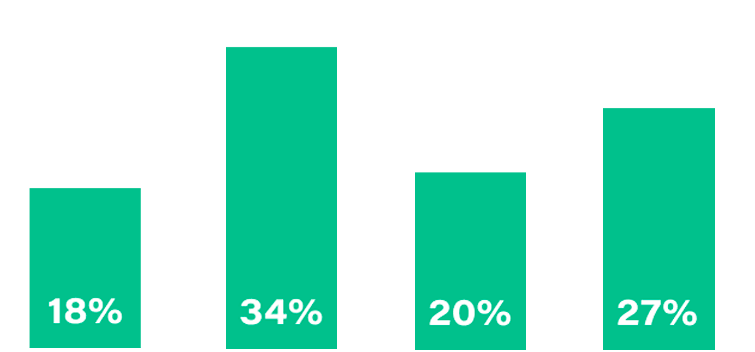
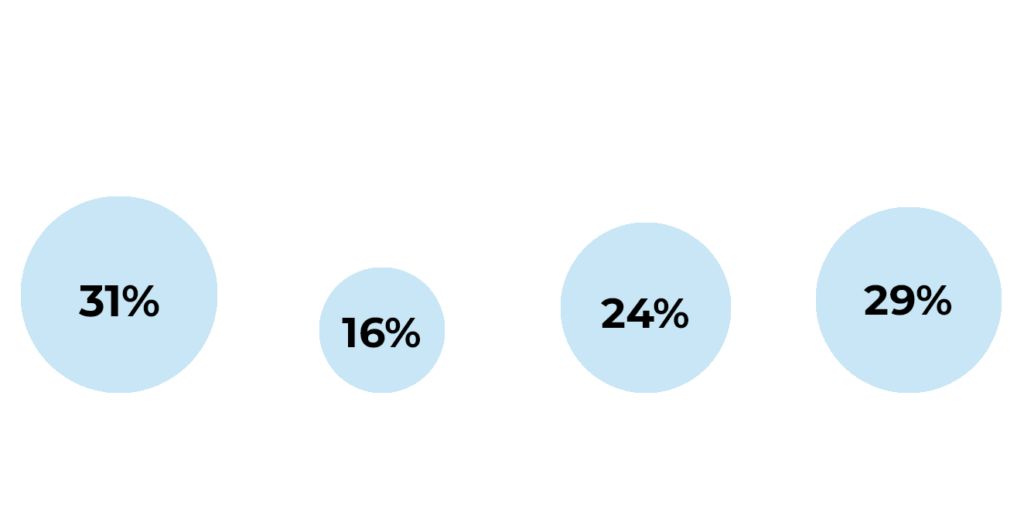
of respondents provide essential services, such as healthcare, childcare, education, clean energy, and affordable housing to communities more cost-effectively.
What Founders Are Saying
Transportation Founder
Anonymous
Anonymous
Housing Founder
Child care Founder
In the News
$100B Opportunity
What if we stopped treating inequality as inevitable – and started treating it as solvable?
Based on data from a cross-section of entities, the annual cost in lost economic output exceeds an astounding $5T.
If the United States made just a 2% improvement in each of these areas, the impact would be $100.7B in gains to the US economy.
Recommendations
Entrepreneurs ranked the following as the likeliest to have the biggest impact on their companies’ ability to enter and operate in a jurisdiction:
1.
Faster contract approval and awarding timelines
2.
3.
Improved communication and outreach to tech companies
4.
More equitable access to bidding opportunities
5.
Reduced compliance and certification costs
Case Study: Binti & the State of Maryland

Maryland faces the critical challenge of ensuring positive, stable living arrangements for its more than 3,000 children and teens in foster care. To meet this challenge head-on, the Maryland Department of Human Services initiated a pioneering collaboration with Binti, a software company founded and led by Felicia Curcuru and focused specifically on improving child welfare outcomes through technology.
Key Activity Metrics:
- Searches Completed: Caseworkers have completed more than 4,500 comprehensive searches
- Connections Identified: The searches successfully identified over 4,300 potential connections for foster care placement, increasing the pool of relatives and close family friends available to support youth.
- Efficiency Gains: On average, each search efficiently locates 26 potential connections per child
- Statewide Increase in Kinship Care: The portion of youth in care living with kin saw a major increase of 33% across the state, ensuring that a substantial number of children benefit from the security of family.
- Jurisdictional Excellence: Eleven Maryland jurisdictions have achieved the critical milestone of doubling their kinship placement rates, establishing new benchmarks for success in child welfare.
- Impact in High-Need Areas: Baltimore City, the jurisdiction responsible for the largest population of youth in care, saw an 18% increase in kin placements, demonstrating the solution’s effectiveness where the need is greatest.
Connect and Take Action
Email us at: innovation@kaporcenter.org
Here are simple steps that entrepreneurs, elected officials, and community members can take to address the barriers facing public benefit startups working with state and local governments.
- Reach out if you are a gap-closing startup ready to help jurisdictions solve big public problems
- Let us know your successes and challenges in partnering with local or state governments
- Give us the best practices or recommendations to scale these partnerships across America
- Convene a Listening Session: Host a public or private forum with local entrepreneurs to hear firsthand about policy barriers and opportunities.
- Conduct a Policy Audit: Launch a review of permitting, licensing, and procurement processes with an equity lens—especially for gap-closing startups.
- Pilot a Fast-Track Program: Create a “Startup Express Lane” for mission-driven businesses, modeled after successful state or city programs.
- Champion Procurement Reform: Introduce or support legislation that simplifies and accelerates how small, innovative companies do business with government.
- If you have problems in your community that you are looking to solve and think a partnership with a gap-closing startup can be the solution, reach out to us
- Keep the current one
- Tell us your stories of successes working with gap-closing startups or challenges you have faced
- Contact Your Local Officials: Send an email or make a call encouraging your mayor, city council, or state rep to support entrepreneurs addressing community challenges.
- Support Local Startups: Use your purchasing power to buy from mission-driven businesses in your area—especially those serving marginalized communities.
- Help Spread the Word: Share stories and stats on how smart policy can unleash innovation and improve lives—through social media, community meetings, or faith groups.
- Click here to find and contact your elected officials.
- Click here to download a sample letter/email to send to your elected official.
- Click here to download a sample 1-hour agenda and discussion questions for a meeting between entrepreneurs and elected officials.
- Report the successes or challenges that you have in getting solutions from gap-closing startups in your communities
Hear More About P.R.I.M.E. Alliance

Chike Aguh
Head of Innovation and Strategy, Gap Closing Startups Chike Aguh is the Head of Innovation and Strategy for Gap-Closing Startups at the Kapor Center. A Fulbright Scholar, recognized authority on the future of work and economic opportunity, and the first person in the entire history of his family born in America, Chike was previously appointed by President Biden to be the Chief Innovation Officer at the US Department of Labor. He led efforts to use data, emerging technologies (AI, quantum computing, cybersecurity, etc.), and innovative practice to advance/protect American workers. Chike holds degrees from Tufts University (B.A.), Harvard Graduate School of Education (Ed.M), Harvard Kennedy School (MPA), and the University of Pennsylvania’s Wharton School (MBA). Chike was also appointed by Gov. Wes Moore as Vice Chair of the Maryland Higher Education Commission.Email Chike at innovation@kaporcenter.org
Download Full Report

About Kapor Center
The Kapor Center’s work focuses at the intersection of racial equity and technology to create a more inclusive technology sector for all. We work to intentionally dismantle barriers to tech and deployment of technologies across the Leaky Tech Pipeline through research-driven practices, gap-closing investments, increased access to computer science education, supporting and partnering with mission-aligned organizations, advocating for needed policy change, and more.